

Vol. 1 No. 1 (2021): Technological and educational trends: 3D bioprinting and other modern resources
Currently, the technology and resources that have emerged (and continue to emerge) become an element of change and improvement in the life of the human being. It should be noted that, thanks to innovations, people have been able to achieve positive development in key sectors such as health and education. For this reason, it should be noted that technology has contributed incalculable benefits to humanity, which is particularly noticeable today, when the world was forced to face phenomena such as the COVID-19 pandemic.
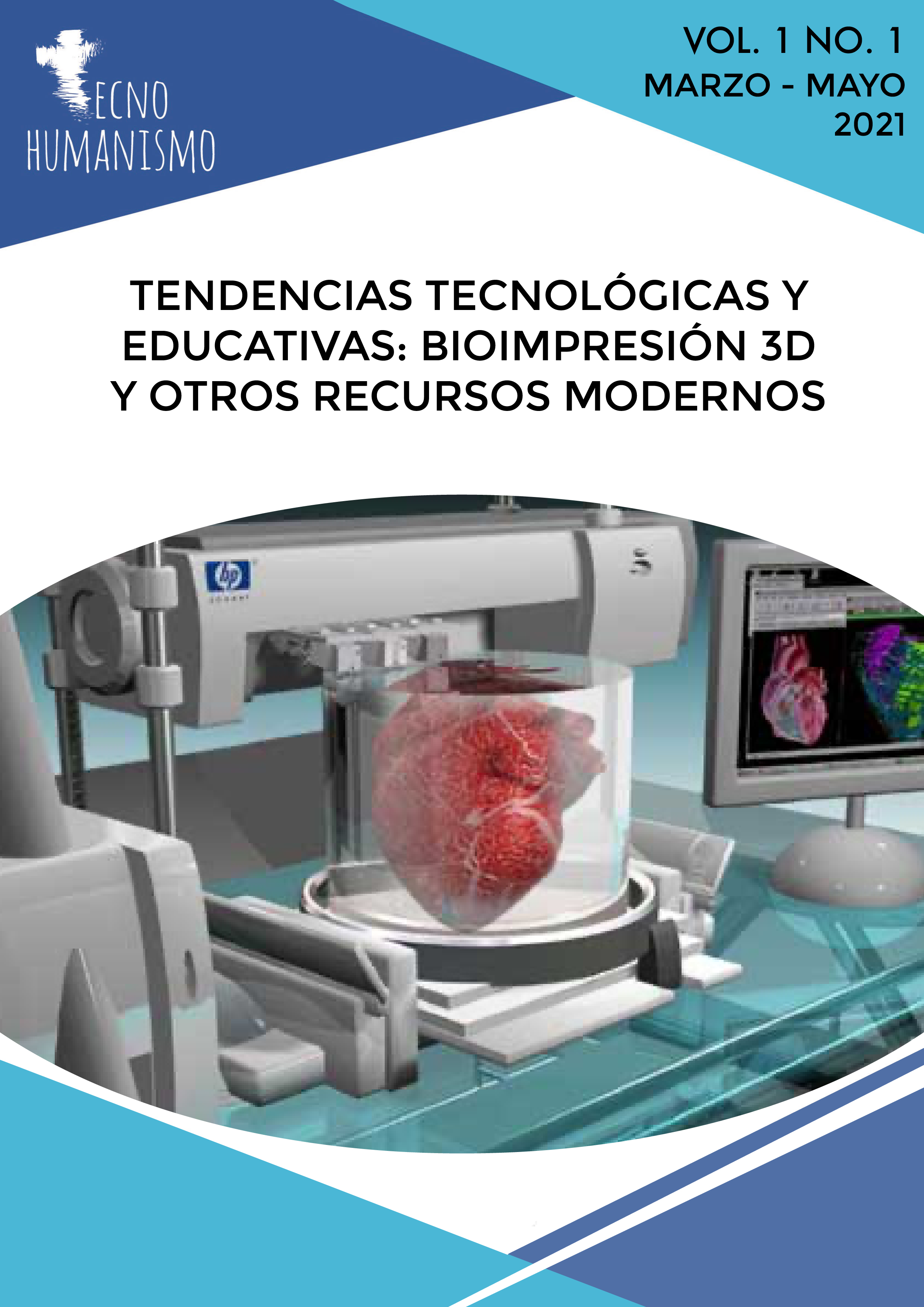
Thus, for example, this issue addresses the relevance of tools such as the 3D bioprinter, which is a technological evolution of conventional 3D printers since it builds biological structures with a material called "bioinks", which are made from cells. mothers. With bioprinting, it is possible, through a layer addition system, to produce biological materials such as skin, tissues and even organs (kidneys, hearts and livers). Likewise, one of the main advantages is the use of the patient's cells to carry out the entire process. Thanks to these cells, tissues and organs customized to the needs of each patient can be printed, although it has not yet been able to assess whether the body will accept it or not.
It is worth noting the great technological innovations that are associated with the use of the cloud. This is another key element that has been gaining strength since 2010, when this new computer and technological architecture was consolidated, reaching users who currently use its services in various aspects of human life. Likewise, both large companies and small and medium-sized companies are progressively migrating to the cloud. For all these reasons, it is pertinent to address the forms and uses that have been attributed to this service and the ways in which it is involved in business, education, social life, among others.
Along with technological innovations in different areas of society, since technology is also created and expressed in reason and in clear articulation with the human condition. Therefore, education has not been left behind, since over the years both worlds have been mixed to create tools and digital environments in which the potential of human beings can be better developed and the way in which they approach to knowledge. The knowledge society is a society of exchange of technology, information, development and education.
Along these lines, Information and Communication Technologies (ICT) have reached educational classrooms at great speed and today demand to be used in all its forms. The digital era has changed pedagogical models, making teachers change work methodologies and use technologies to improve educational processes with innovative resources.
Thus, you can see in this article some articles related to learning strategies, the development of critical thinking, collaborative learning, and the quality of training in times of pandemic.
The objective in this issue involves emphasizing the forms that technology has been adopting at the same time that it has become more vigorously involved in other sectors such as health and education and the benefits that this entails on the roads, even when they are unlikely.
Maria Gabriela Garcia
Published:
2021-03-01


