

Vol. 2 No. 1 (2022): Challenges in a post-millennial context: environmental, educational, scientific and business problems in the 2000s
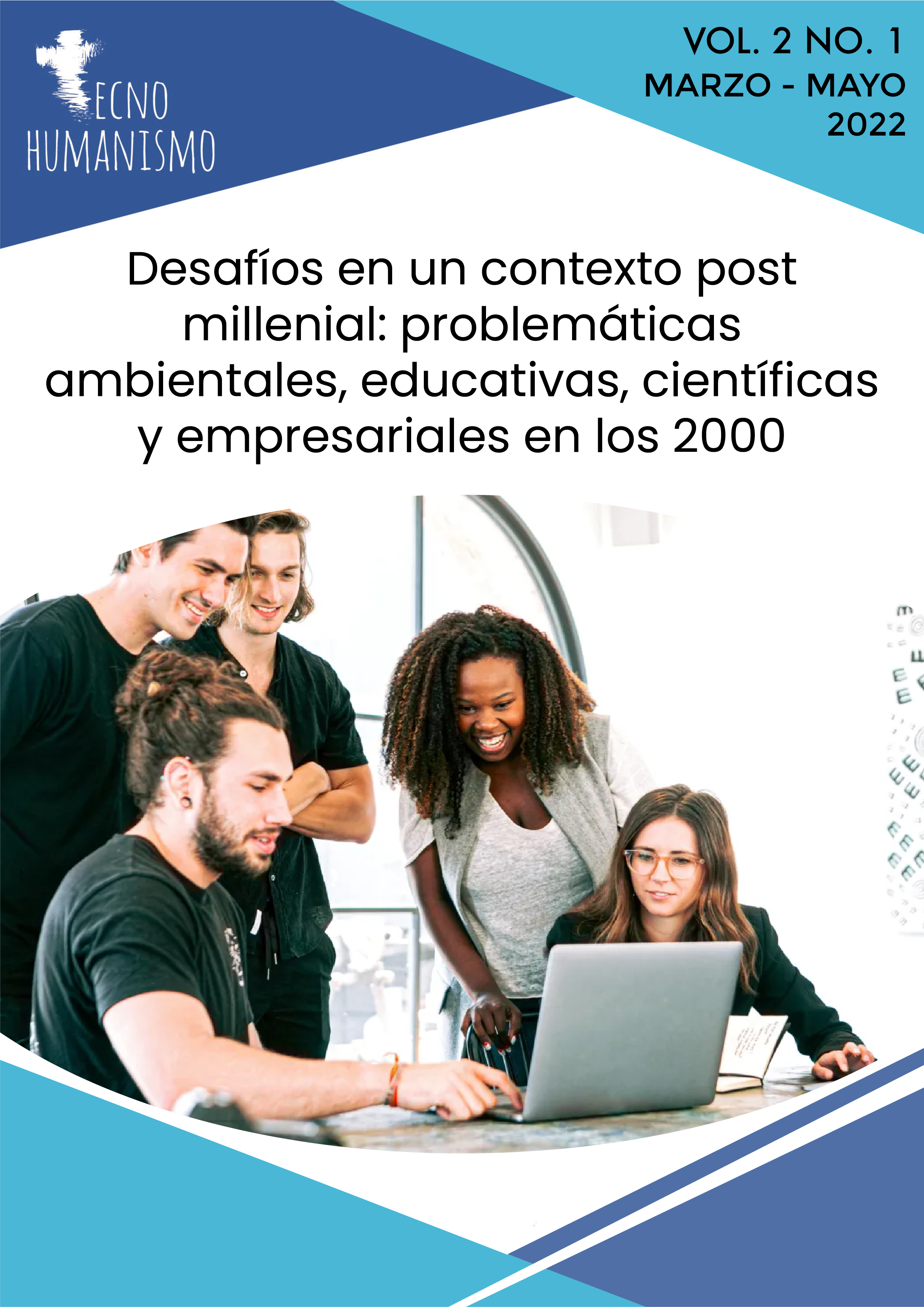
The end of the reign of millennial youth is nearing –soon they will be part of prehistory– to make way for generation Z (those born between 1994 and 2010). As expected, there are already a multitude of labels and descriptions that try to offer a profile of this heterogeneous group of young people up to 24 years of age who, already born in the midst of the digital age, cannot conceive of the world without the Internet.
Thus, the Internet is like a wave, for which society is not fully prepared. In this line, a series of changes and modifications in society must be conceived as a response to the technological environment and adapt to the new generations, who demand more and new things.
It should be noted that among the main characteristics that are separated from millennial posts is the marked tendency to be pessimistic, anxious, to avoid risks and not have great aspirations. And, since their main source of information is social networks, their knowledge and understanding of current affairs could be superficial – due to fake news. Likewise, for millennials, there is no life without the Internet: at the time it was the desktop computer, then the notebook and currently the Smartphone, but the people we are talking about cannot conceive of their relationship with the world without these devices and most of them of what they do (from watching movies to working or meeting people or buying products) will always be using the latest technology.
As a consequence of this, researchers and current literature increasingly seek to understand this profile and study the links it has with other aspects of society; Among a diversity of topics, this issue analyzes reading comprehension in university students of the aforementioned generation, especially knowing that a central characteristic of this generation is the extensive and daily use that they make of currently available technological tools. This particularity gives them a different lifestyle from other generations and impacts their reading habits: they prefer the screen to printed text.
For this reason, educational paradigms must consider the use of social media and other technological environments for learning and incorporating tools considered by some as negative cultural patterns for learning and turning them into new scenarios for the exchange of information, knowledge and interaction between the actors of the educational process. Above all, to the extent that the literature indicates that making reading interesting improves interest in reading, develops basic skills for reading comprehension and therefore improves academic performance.
Also studies of their creativity and imagination, the latter analyzed from the studies of Kant, who distinguishes imagination as reproductive and productive. Both have a synthetic and representative-intuitive aspect, except that the first (reproductive imagination) has its place in psychology and the second (productive imagination) in transcendental philosophy and seeks to delve into its theoretical and philosophical aspects. In addition to the organization and planning in consciousness.
Maria Gabriela Garcia
Published:
2022-03-01


