


Vol. 3 No. 3 (2023): Science in relation to ethics
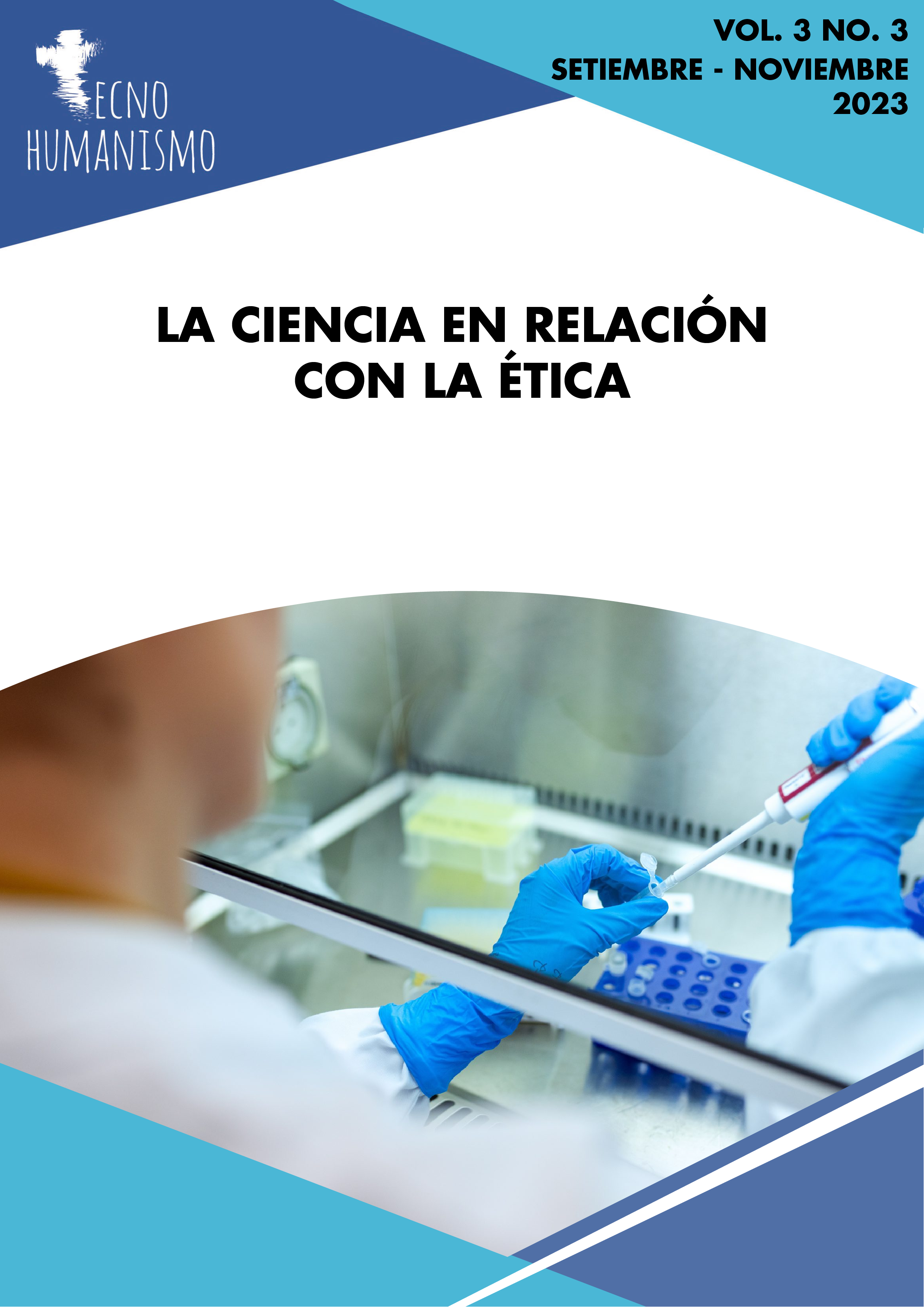
Ethics transcends everything we do, so it undoubtedly also affects how we do science. We understand by science the work of discovering how the universe works, what its operating laws are, how we can model them, and ultimately how we can better foresee the future. Advances in science allow us to make better use of natural resources through the new technologies to which it gives rise. Technology is the practical consequence of science. Technology marks how we can live in its practical aspects (which is modulated by the reality of the economy); and science marks how we understand the world and our position in it (in contrast and constant dialogue with philosophy and religion). And in both cases, science and technology, we have to see how they coexist and how they interact with ethics.
We are going to focus here on a couple of dimensions of this “science + ethics” pairing: 1) how we apply the results of science through technology and how ethics affects it, and 2) how science is done, how it develops and how ethics affects this process.
It is a commonplace to say that science is "neither good nor bad" since what it is is the verification of our mental model of the universe. Some basic principles and some mathematical hypotheses of the model are ventured, its projections are calculated in practical situations and said quantities are measured in reality. If they agree and are repeatable, we are convinced that the model is adequate, that is, it adequately reflects reality in the measured circumstances. Over time, these models cover more and more areas of reality, from the simplest to the most complex, from the most basic components of matter to the astronomical universe, from inert materials to living bodies, from the basic structure of life to the entire changing environment of the individual and his society - and with increasing precision. It really is an exciting activity.
But knowing is power. And the ethics of each one is the one that will dictate the way in which said knowledge and the corresponding technologies are applied. Computers, communications and the internet have made our lives so much easier, giving us access to much more information much faster and cheaper – but they can also be used to carry out destructive attacks on privacy, against financial institutions, and in a world of the “internet of things”, against physical infrastructures, etc. That is why we have to equip ourselves with rules of coexistence, with laws that reflect the appropriate balance between the freedom to use technology with the necessary protection of people and institutions that we have given ourselves.
This balance takes different forms depending on the social environment in which it develops, and therefore the prevailing ethics. Finding and agreeing on such balances becomes more difficult the faster the evolution of technology, and therefore the status quo, than what is economically feasible for the majority of society. A clear case is the technological explosion to this day of information technology and the Internet. At the base of this explosion is the discovery of semiconductors and materials science. This revolution has collapsed many of the productive and economic models of a few decades ago, while it has opened up endless new opportunities. Information is available to everyone – or almost everyone. The situations raised by the defense of the copyright of digitizable products (such as literature, music, video and cinema), by the impact of Wikileaks and, recently, by the NSA wiretaps demonstrate at the same time how easy which is having access to much/all information, such as the complexity of resolving the dilemma of where is the balance point that we all consider most appropriate, fairest. And you have to decide very quickly, since technology advances rapidly. Our problem is that the institutions are not capable of digesting this speed of change, and this causes clear dysfunctions. But it is clear that a fundamental guide to do so is to have some basic and widely accepted ethical principles. This in turn depends on an adequate education in ethical values. Society needs to agree on which are the priorities, how to transfer them to the new generations and how to adapt them based on new horizons of knowledge.
Published:
2023-09-05


